Artificial Turf Installation in the Phoenix East Valley
East Valley Artificial Turf focuses on the desert-yard projects homeowners actually compare — backyards that stay green through July, pet areas that rinse clean, pool surrounds without clippings in the water, and putting greens that roll true — across Scottsdale, Chandler, Gilbert, Mesa, Paradise Valley, and Queen Creek. In this market, the real job starts below the blades: base prep, drainage, edge restraint, heat management, and material choice that fits the yard.
Request Turf Help Call (480) 568-5915
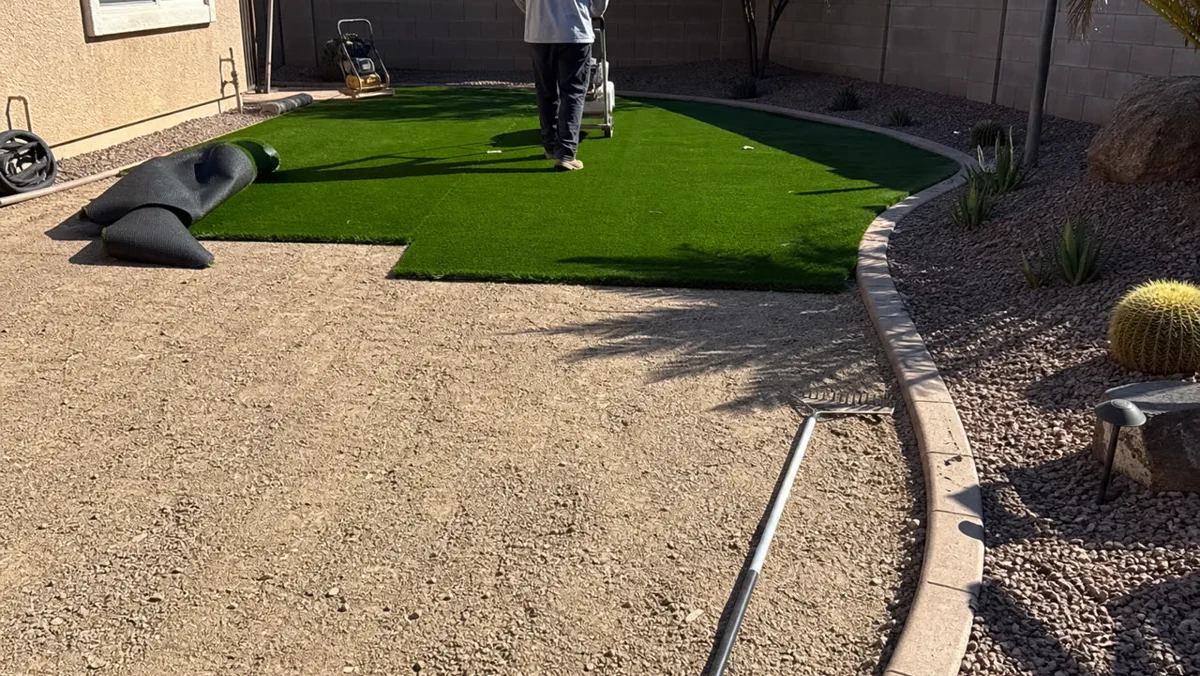
Excavation depth, compaction, and aggregate selection decide whether turf stays flat for a decade or ripples in a year. The green part is the easy part.
Grading, low spots, pet rinse zones, and pool splash get solved before turf is stretched — water that sits under turf is the failure nobody sees coming.
Blade shape, pile height, color, and infill all change how turf handles Arizona sun. The right system for a shaded Gilbert side yard is the wrong one for a west-facing Scottsdale pool deck.
What the service covers
What This Turf Service Involves
- What stays and what goes: existing grass, gravel, old turf, irrigation lines, pool edges, or concrete transitions that change the prep work.
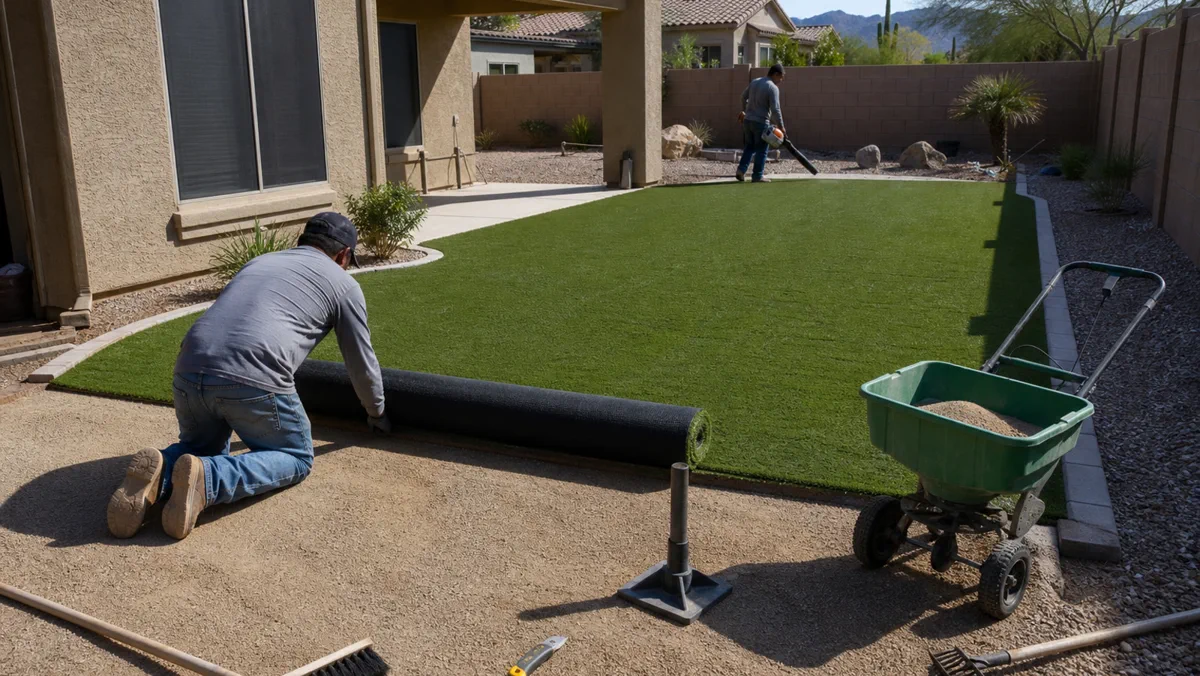
- How the base and drainage need to be built: the part that decides whether the yard stays flat, drains cleanly, and avoids odor, soft spots, or seam problems later.
- Which turf system fits the use: family lawn, pet area, putting green, or pool surround — because those should not all be built the same way.
That is the point of the first call or form note: start with the yard problem, then confirm the practical next step without making you sort out the whole project first.
Common yard needs
Artificial Turf Options for Common Yard Problems
Start with the problem you want solved: a cleaner pet area, a softer play space, a pool edge without clippings, a better-looking front yard, or a putting surface that feels intentional. The right turf system depends on use, drainage, edges, shade, and how the finished yard should feel day to day.
When You May Need Artificial Turf
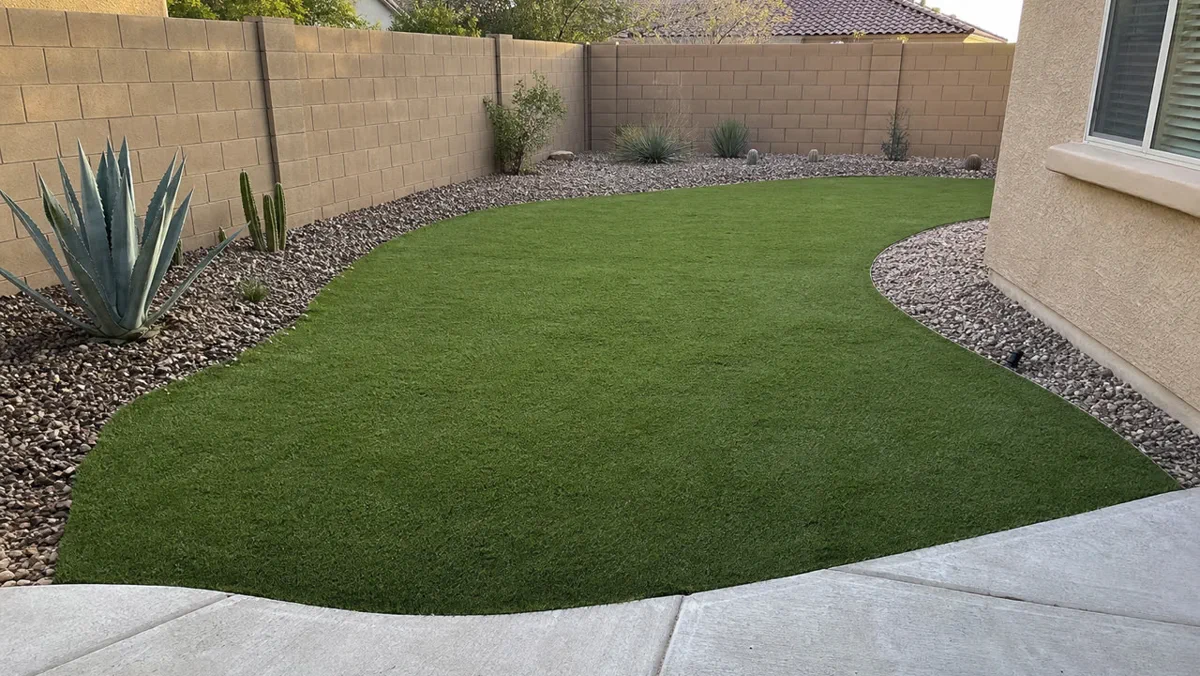
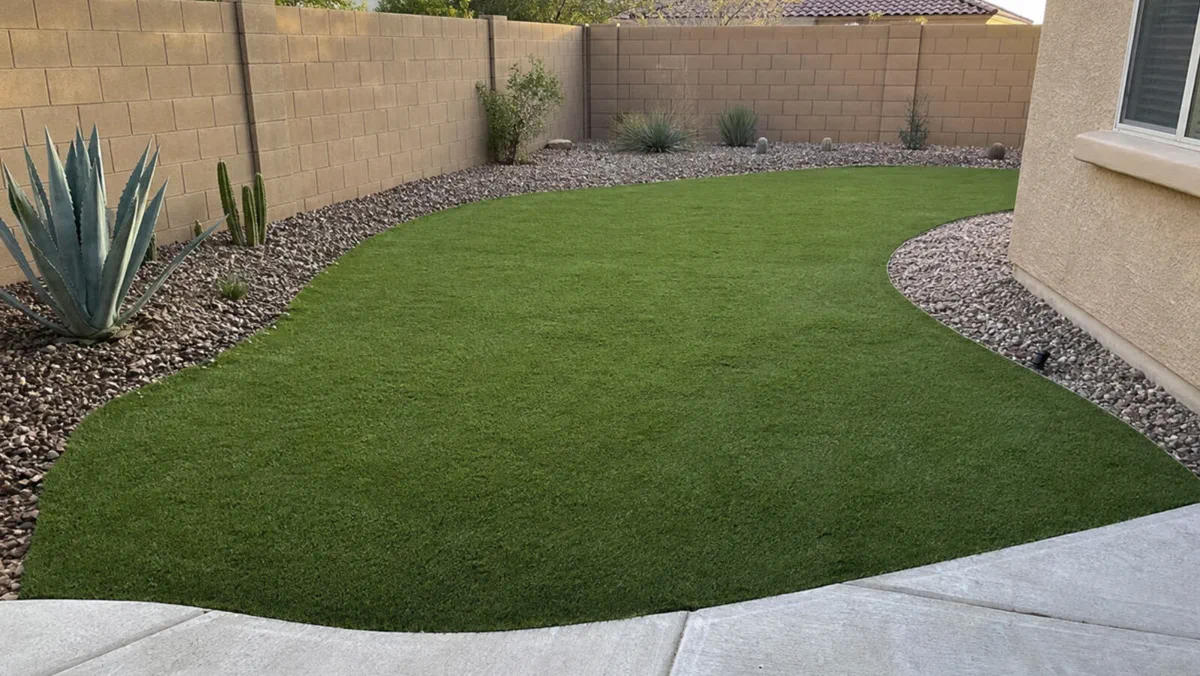
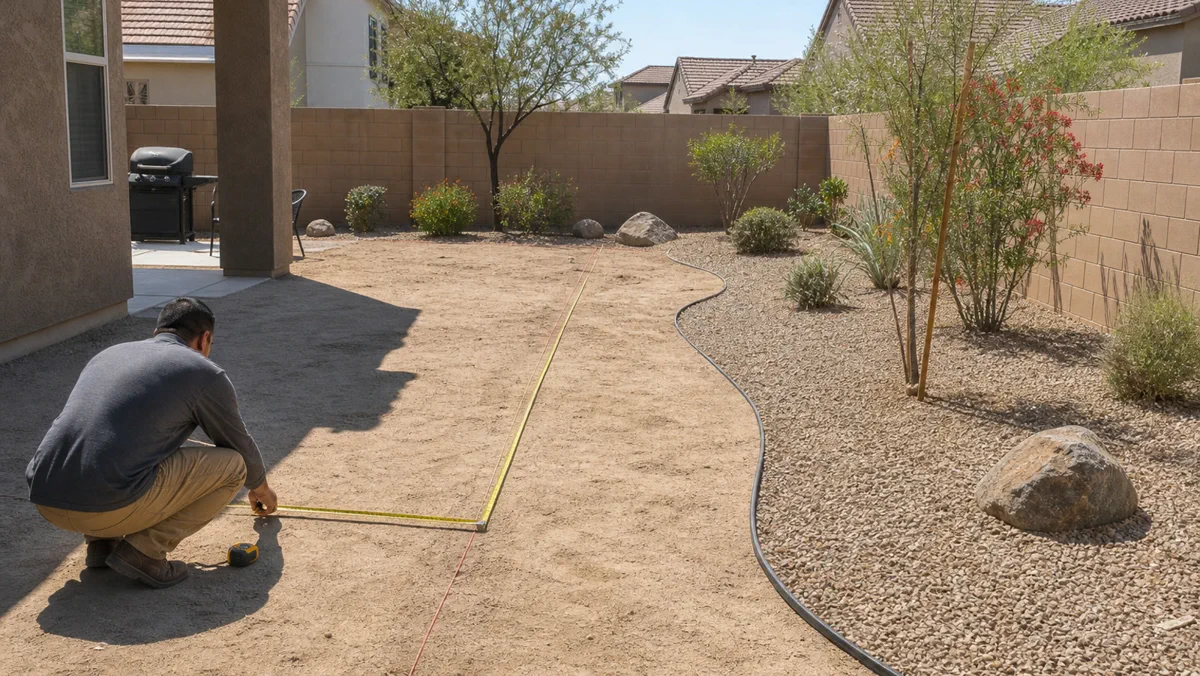
Most East Valley projects fall into a few familiar patterns. Some homeowners want a full backyard conversion so the family has a soft, clean surface instead of tired grass or bare gravel. Others need a pet area that rinses out clean, a pool surround that handles splash and bare feet better than hardscape, or a putting green where the base and surface are built for practice instead of landscaping. Each one looks similar from the street and behaves differently under the surface.
Why Turf Projects Fail in East Valley Yards
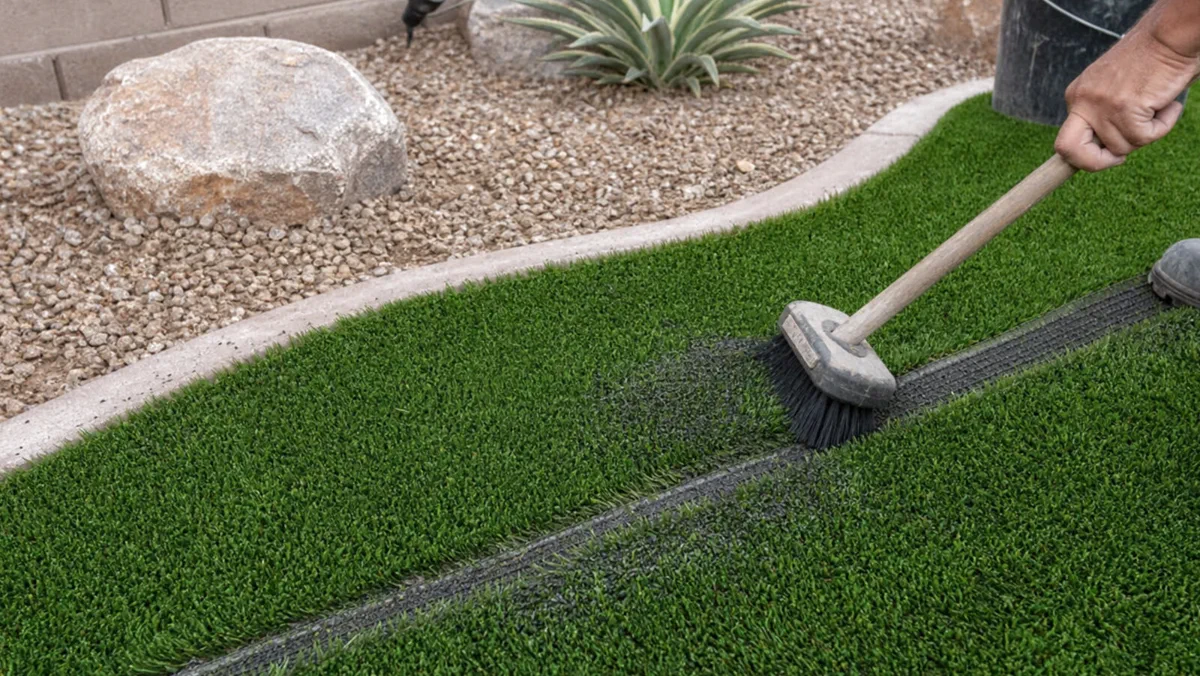
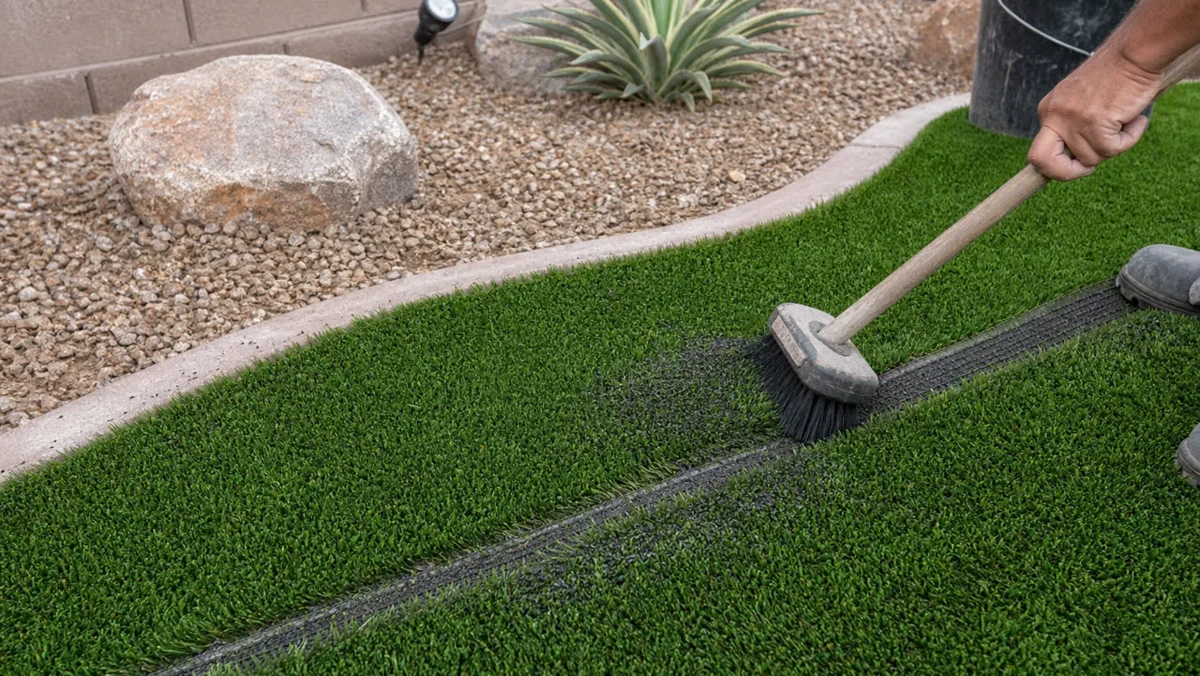
Arizona is one of the best places for turf and one of the easiest places to get it wrong. Summer heat tests the fiber, monsoon bursts punish lazy drainage, and decomposed-granite edges work their way into the pile when the restraint detail is weak. Honest planning acknowledges all three instead of pretending every yard takes the same turf and the same base.
What Causes Ripples, Odor, Drainage, or Edge Problems
Almost never at the grass. Ripples and soft spots trace back to compaction. Visible seams point to layout and grain choices. Lifted edges usually mean restraint was skipped or rushed. Odor complaints usually come from pet systems that were sold as regular landscape turf. That is why the installation page spends so much time on the layers nobody sees.
What Affects Artificial Turf Cost and Scope
A first estimate can begin with how you want to use the space and what is there now. Grass, gravel, concrete, old turf, irrigation lines, access, drainage, pet use, pool edges, shade, and material choice all affect scope. The cost guide explains the common cost drivers; the follow-up or site visit can confirm the details against the actual yard.
What Happens After You Call or Fill Out the Form
Call or use the form with a short plain-language description of the space and how you want to use it. From there, the follow-up can ask any practical questions needed to understand the base, access, drainage, and turf system that fits the property.
Well-planned artificial turf can make a yard easier to maintain while keeping the surface cleaner and more consistent through regular use.
Questions Homeowners Ask About Artificial Turf
Does artificial turf get too hot in Phoenix?
In direct summer sun, turf surfaces genuinely get hot — anyone claiming otherwise is selling. What changes the experience: lighter blade colors, taller pile, heat-reflective fiber options, infill choice, shade placement, and a quick rinse before barefoot time. Design for your exposure, not the brochure.
How long does an installation take?
Typical residential yards run a few days: demolition and haul-off, base build and compaction, then turf, seams, edges, and infill. Access width, square footage, and features like greens or pet systems move the schedule.
Will weeds come through the turf?
Through the backing, essentially never; at edges and seams, occasionally — wind-blown seed in infill and DG borders is the realistic source. Proper base prep, edge restraint, and an occasional blow-off keep it a non-issue.
What happens to my existing irrigation?
Lawn zones get capped or repurposed to surrounding planters; lines under the turf area are decommissioned so a future leak never soaks the base. Share what the system waters now if you know it; the final irrigation plan can be confirmed during the visit.
Is turf HOA-friendly in the East Valley?
Widely, and increasingly encouraged for water savings — but standards vary on color, pile, and front-yard use, especially in Scottsdale and Paradise Valley. Check your CC&Rs early; the site review can include the spec sheet HOAs ask for.
Ready to Talk Through Your Turf Project?
You can call or use the form even if you are still comparing options. A short description of the yard is enough to start a practical conversation about installation, pet turf, pool-area turf, putting greens, or backyard conversion work in the Phoenix East Valley.